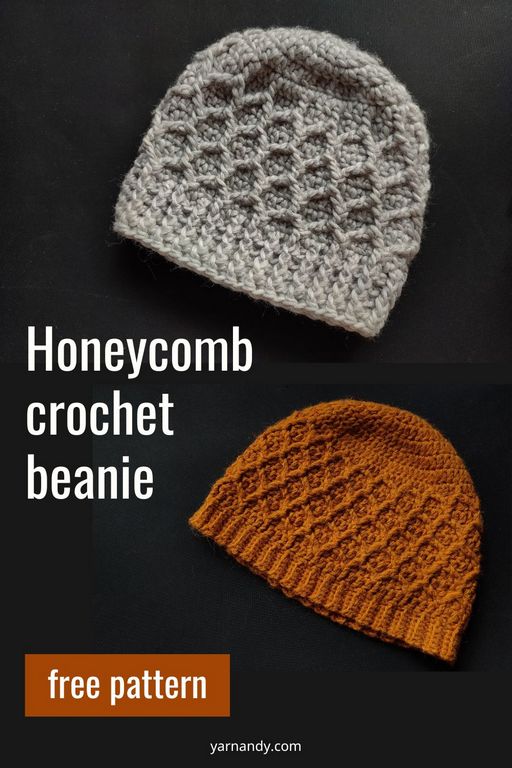
Keep your head warm and show off how much you love bees with this easy to make crochet honeycomb beanie with hexagonal stitch pattern that makes a lovely outer texture.
You can make it in any weight of yarn and you have full instructions and video tutorials below that will show you step by step what you need to do to make one or many of these.
This tutorial is not for complete beginners, as you need to be familiar with standing stitches and post stitches, but in the video I show you everything you need to know.
Any yarn will work for this, but I recommend that you choose a soft, fluffy yarn with little elasticity, maybe woolen spun or with a soft halo, for the best results.
Contents

About this honeycomb beanie pattern
An easy to make beanie with a beautiful honeycomb stitch pattern and simple ribbing on the edge.
You can make this in any weight of yarn and for any head size, for a cap, a beanie that just covers the ears, or a double-brim beanie.
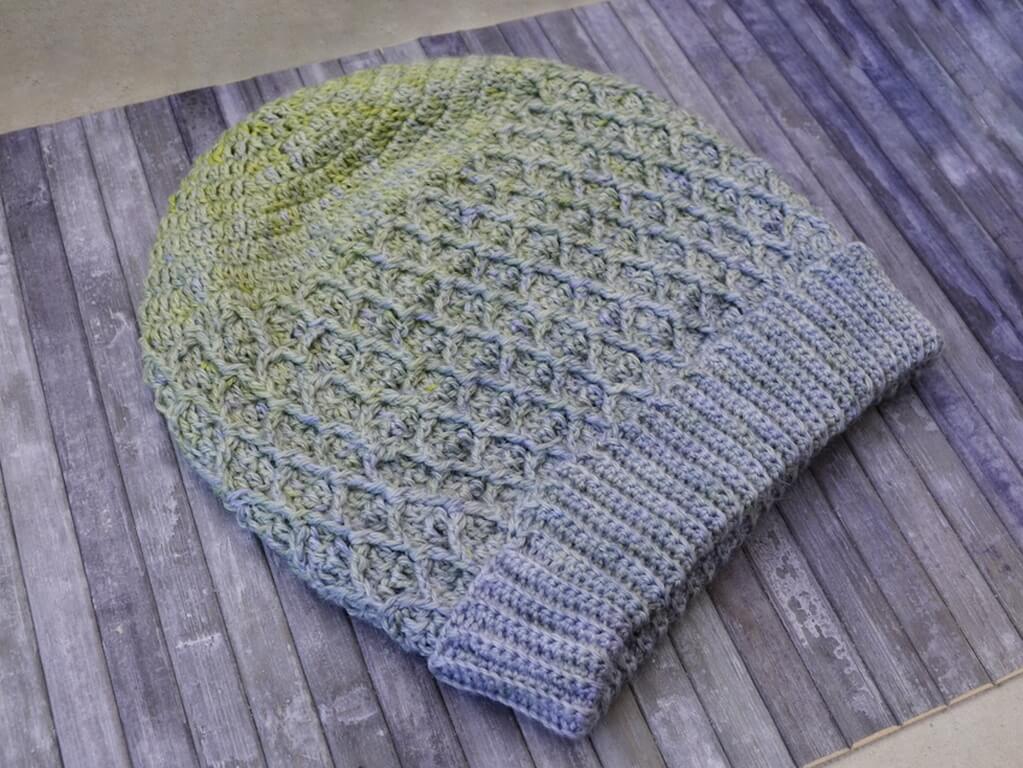
You first make the crown to your desired circumference using plain stitches, then make the textured body to the length you prefer, adding the sideways elastic ribbing at the end or continue with a non-elastic ribbing.
Measurements
The table below gives you measurements that you work to in order to achieve the desired fit with any gauge.
Use a tape measure to measure the head of the recipient and work to the numbers already calculated. When you are in between sizes, choose the smaller size, for a snug fit.
The sizes range between head sizes of 41 and 64 cm (between 16″ and 25″) with no ease.
You can change the length of the hat by making more or fewer rows in pattern.
| Size | A | B | C | D | E | F |
| Head (cm) | 41 | 46 | 52 | 56 | 60 | 64 |
| Head (“) | 16 | 18 | 20 1/2 | 22 | 23 1/2 | 25 |
| Crown diameter (cm) | 13.1 | 14.6 | 16.6 | 17.8 | 19.1 | 20.4 |
| Crown diameter (“) | 5.1 | 5.7 | 6.5 | 7.0 | 7.5 | 8.0 |
| Hat height w/ brim (cm) | 16 | 19 | 22 | 24 | 25 | 26 |
| Hat height w/ brim (“) | 6 1/2 | 7 1/2 | 8 1/2 | 9 1/2 | 10 | 10 |
| Textured height (cm) | 9.5 | 11.7 | 13.7 | 15.1 | 15.4 | 15.8 |
| Textured height (“) | 4.0 | 4.6 | 5.2 | 6.0 | 6.3 | 6.0 |
| Brim height (cm) | 6.5 | 7 | 7.5 | 8 | 8.5 | 9 |
| Brim height (“) | 2.5 | 2.5 | 3 | 3 | 3 | 4 |
Skill level
Intermediate in Tunisian crochet, due to working with short rows in a magic ring and ribbing made up of two types of stitches.
Gauge
The gauge is variable. You can work in any yarn weight with the proper hook size that creates a smooth, soft fabric, without gaps.
Notions
The following are an example of what you can use to make a hat of similar appearance as the yellow sample.
Yarn: DK weight or size 3, with 250 meters per 100 grams; approximate usage per size: 130, 150 (180, 200) [230, 250] meters.
Hook: 4 mm crochet hook.
Tapestry needle, scissors, tape measure.
In sample: Rico design soft alpaca, 60% acrylic, 20% wool, 20% alpaca, 250 meters per 50 g. Size C made of 60 g in colorway 002, mustard.

Observations
This hat is worked top-down, with joined rounds, all on the right side of the fabric.
You can make the hat taller or shorter by varying the number of rows you make in the body.
There are two options for ribbing. You can replace the ribbing at the bottom with a different type of ribbing.
Stitch counts, are noted at the end of each row where relevant, after the — symbol.
Repeats are enclosed in [square brackets].
Abbreviations
AC – A cluster or FpEDc-Dc-FpEDc cluster: YO, insert hook behind front post of previous BC, YO and pull up a loop, Ch 1, YO and pull through 2 loops on hook; insert hook into next unworked St, YO and pull up a loop, YO and pull through 2 loops on hook; insert hook behind front post of next BC, YO and pull up a loop, Ch 1, YO and pull through 2 loops on hook, YO and pull through 4 loops on hook to finish cluster;
BC – B cluster or FpEDc-Dc cluster: YO, insert hook behind the next stitch or cluster, YO and pull up a loop, Ch 1, YO, pull through 2 loops on hook; YO, insert hook into the next unworked St and pull up a loop, YO, pull through 2 loops on hook, YO, pull through 3 loops on hook to finish the cluster;
BpEDc – back-post extended double crochet stitch
Ch – chain;
Dc – double crochet stitch;
FpEDc – front post extended double crochet stitch;
MR – magic ring;
Rep – repeat;
Sl St – slip stitch;
St – stitch;
YO – Yarn over.
Instructions
Crown
Start with a MR.
The first Dc is always a standing Dc.
Row 1. 12 Dc in MR, Sl St to top of SDc — 12 Sts
Row 2. Rep [2 Dc in next St] around, Sl St to top of SDc — 24 Sts
Row 3. Rep [2 Dc in next St, 1 Dc] around, Sl St to top of SDc — 36 Sts (12 Sts increased)
Continue in established pattern, increasing by 12 Sts per round, until the diameter of the circle has the desired size from the table.
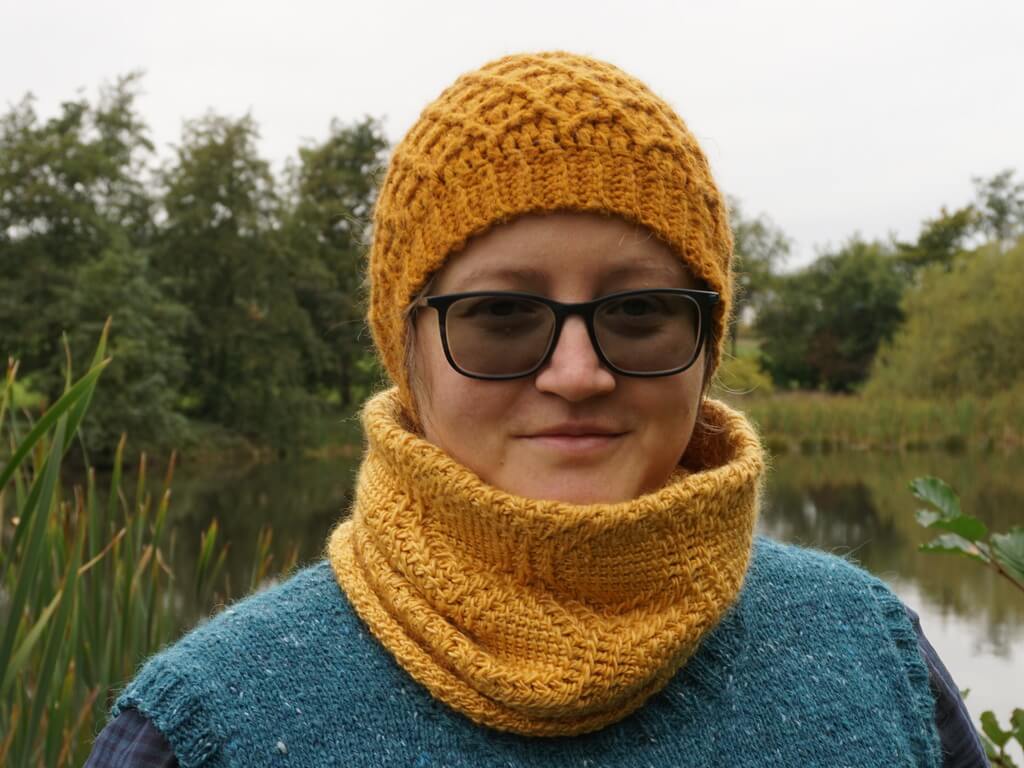
If working to the measurements in the table, the hat fits close to the head.
If you want a slouchy beanie, add more increase rounds here and use an elastic ribbing.
Body
Row count resets here and the textured section begins.
Row 1. Rep [1 Dc, BC, 2 Dc] around, Sl St to top of SDc
Row 2. Rep [1 Dc, AC, 2 Dc] around, Sl St to top of SDc
Row 3. Rep [1 Dc, BC, 2 Dc] around, Sl St to top of SDc
Row 4. Rep [3 Dc, AC] around, Sl St to top of SDc
Row 5. Rep [3 Dc, BC] around, Sl St to top of SDc
Repeat Rows 2-5 until you reach the desired beanie length, minus the length of the ribbing, ending on a repeat of Row 3 or Row 5.
Brim
You can use any type of ribbing that you are familiar with.
Below you will find instructions for non-elastic ribbing made with front post and back post stitches.
The first stitch is a standing stitch.
Row 1. Rep [1 BpDc, 1 FpDc] around, Sl St to top of first St
Repeat Row 1 as many times as desired (at least 4 more times) to make the ribbing wide enough to cover the ears. Leave a tail for seaming the edge with an invisible stitch and weave in the ends.
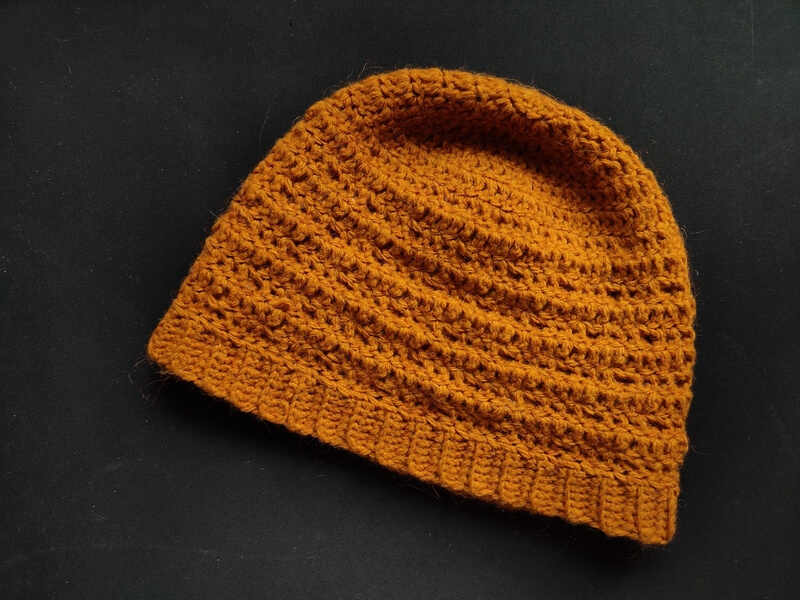
Video tutorials
The first video is the right handed version, the second the left handed.
The entire hat tutorial.
Adding fleece lining to crochet hats.
Final remarks
If you enjoyed this pattern, here are some more beanie patterns on the blog (for now they are all for Tunisian crochet).
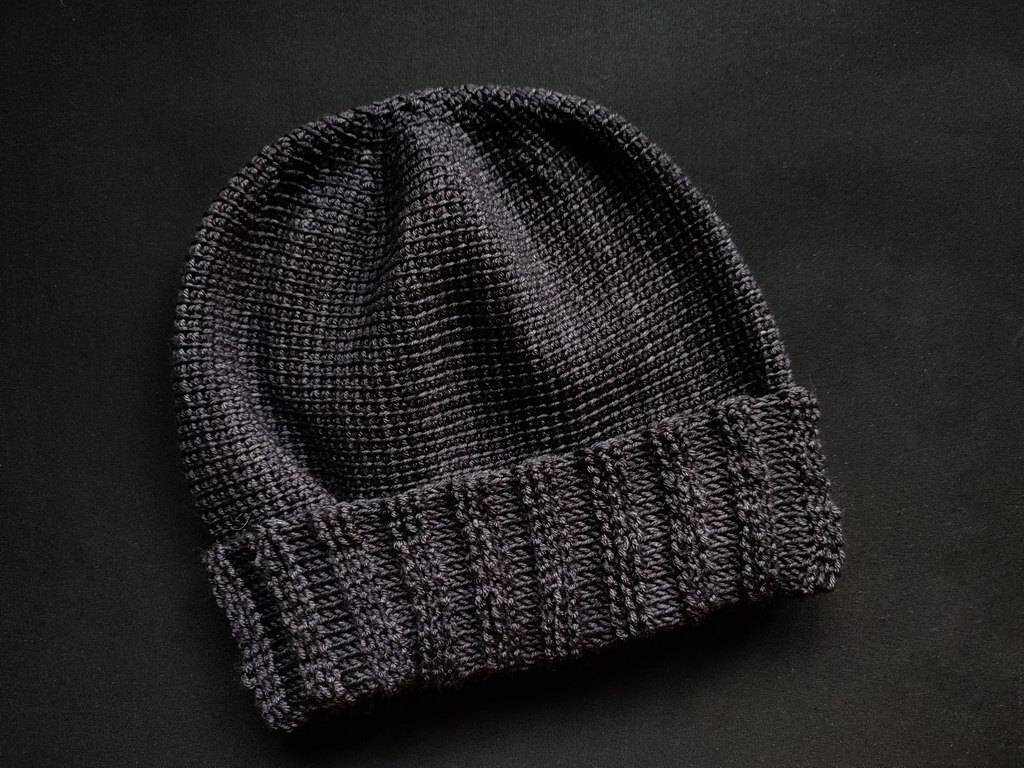

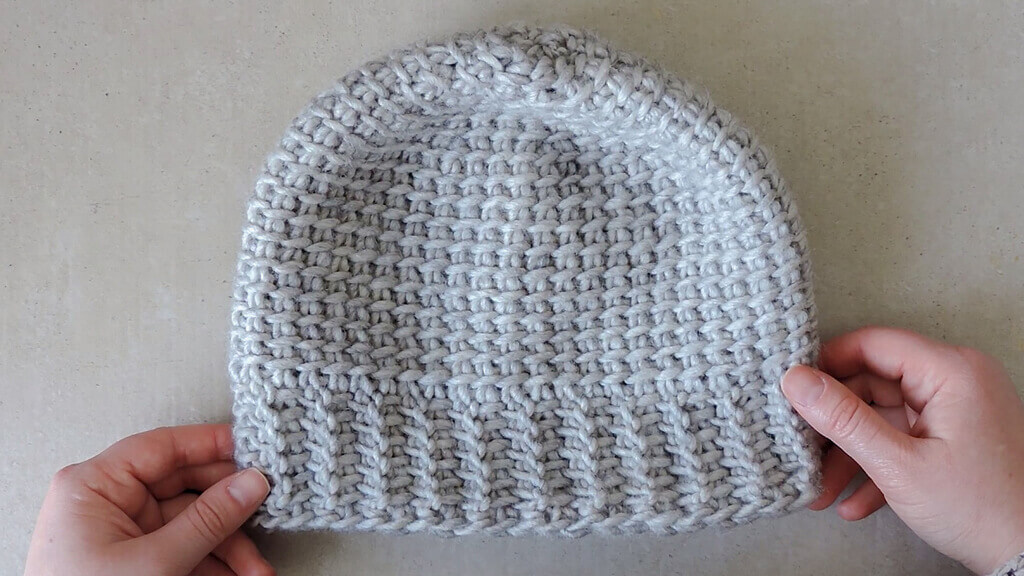
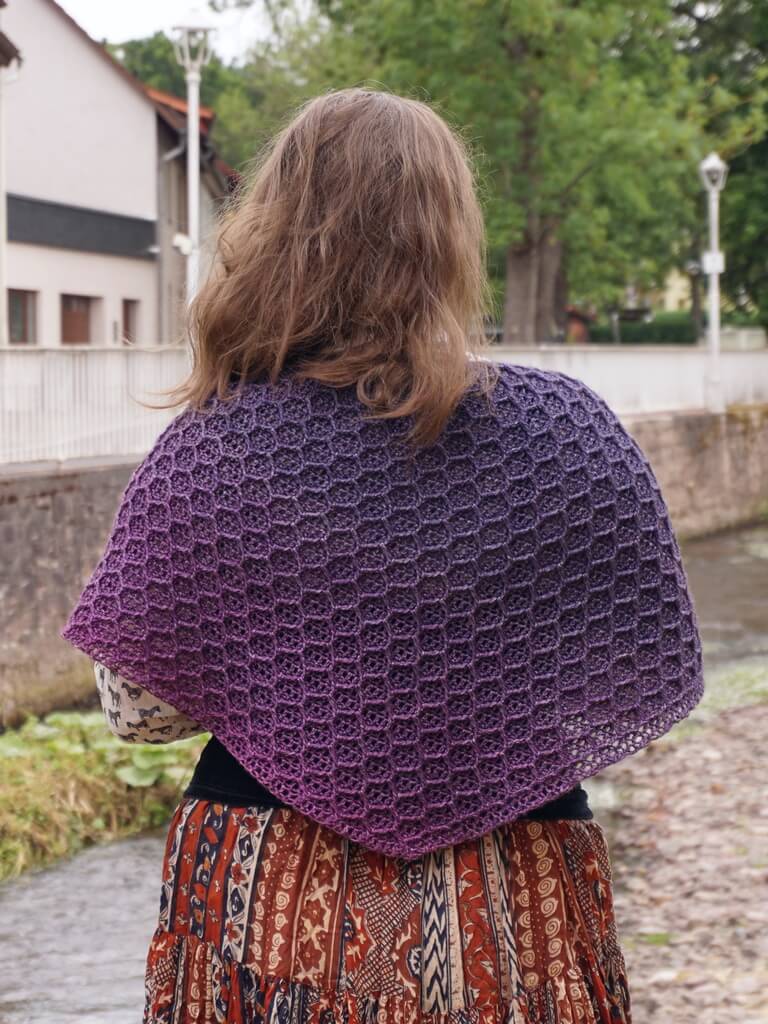
Or if you’d like to explore this beautiful stitch pattern in other types of projects, I have paid patterns for blankets and shawls. See them below.
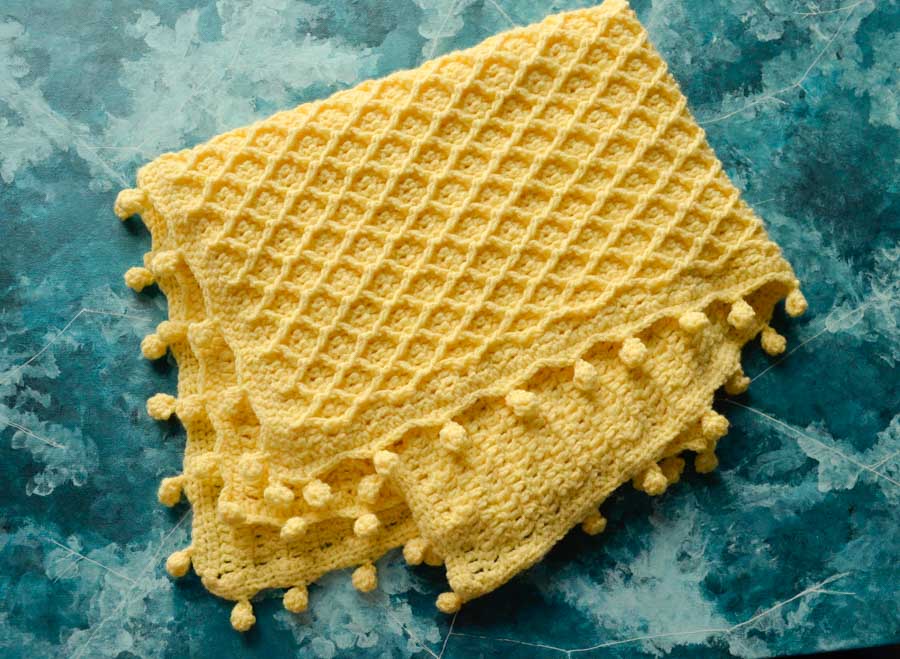
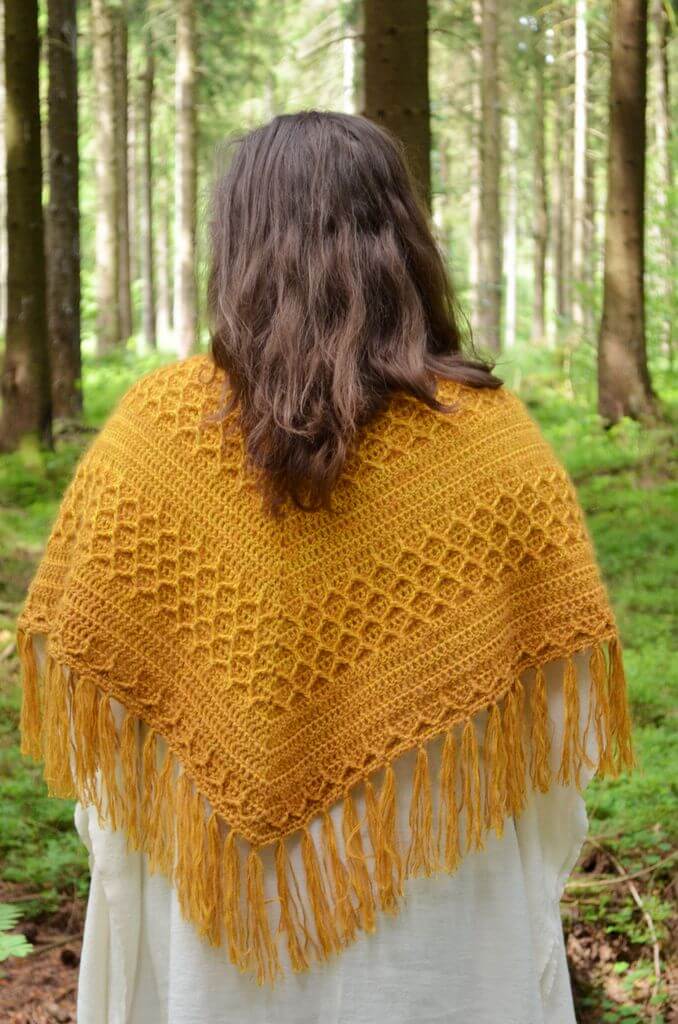
If you want to know when I publish more free tutorials, sign up to my email updates below.
And if you want to save this post for later, you can use the image below to pin it.